Large construction projects rarely fit inside one company’s box. Owners want single-point accountability. Specialty work demands niche skills. Margins are thin, schedules are tight, and risk prefers to hide until the worst time. Joint ventures solve many of these tensions by combining talent, balance sheets, and track records to chase work neither partner could win alone. But a joint venture without a clean bond strategy is just a handshake with a blindfold. Contractor bond insurance sits at the center of whether the venture will actually get awarded, mobilize, and finish without destroying both partners’ capital.
I have structured and managed joint ventures on public and private work from $10 million tenant improvements to $700 million infrastructure upgrades. The difference between a joint venture that performs and one that unravels often comes down to two ingredients: governance and surety. Governance sets who decides what. Surety, packaged through the right contractor bond insurance, determines whether the owner can sleep at night and whether the partners can protect their own houses if things go sideways.
This guide walks through how to set up a joint venture with the bonds dialed in: who signs, what each bond covers, how to allocate indemnity, and how to keep the surety relationship healthy from pre-bid through closeout. I will also share practical structuring patterns I have seen work, how to present blended capacity to a surety, and where projects most often get tripped up.
Why owners favor joint ventures, and why sureties care
Owners, especially public entities, like joint ventures for scale and specialization. A regional GC might team with a heavy civil contractor to bid a transit station where vertical construction interfaces with track work. On paper, the owner gets the best of both worlds. From the surety’s perspective, that same setup looks like correlation risk. If the venture fails, two balance sheets feel the loss. If one partner underperforms, the other may bear more cost to keep the job afloat, then both still owe the surety under indemnity.
Sureties underwrite people and numbers. They evaluate the project, the joint venture agreement, each partner’s financials, historical work-in-progress (WIP), cash flow reliability, claims history, and management discipline. The stronger the evidence that the partners can work as one company for the life of the contract, the better the terms. When the joint venture agreement is vague, or the financial backstops are mushy, the bond program reflects that uncertainty through smaller capacity, tighter collateral demands, or higher rates.
The essential bond types, and how they behave inside a JV
Most construction joint ventures carry three core bonds. Understanding who they protect and how they trigger is the first step in aligning the venture’s internal deal with the external expectations of owners and sureties.
Bid bond: Guarantees the bidder will enter the contract at the bid price and provide final bonds if awarded. If the joint venture is the bidder, the bid bond must name the joint venture as principal, not the individual partners. Sureties commonly issue the bid bond on the combined strength of the partners, but they want to see final bond viability before they back the bid.
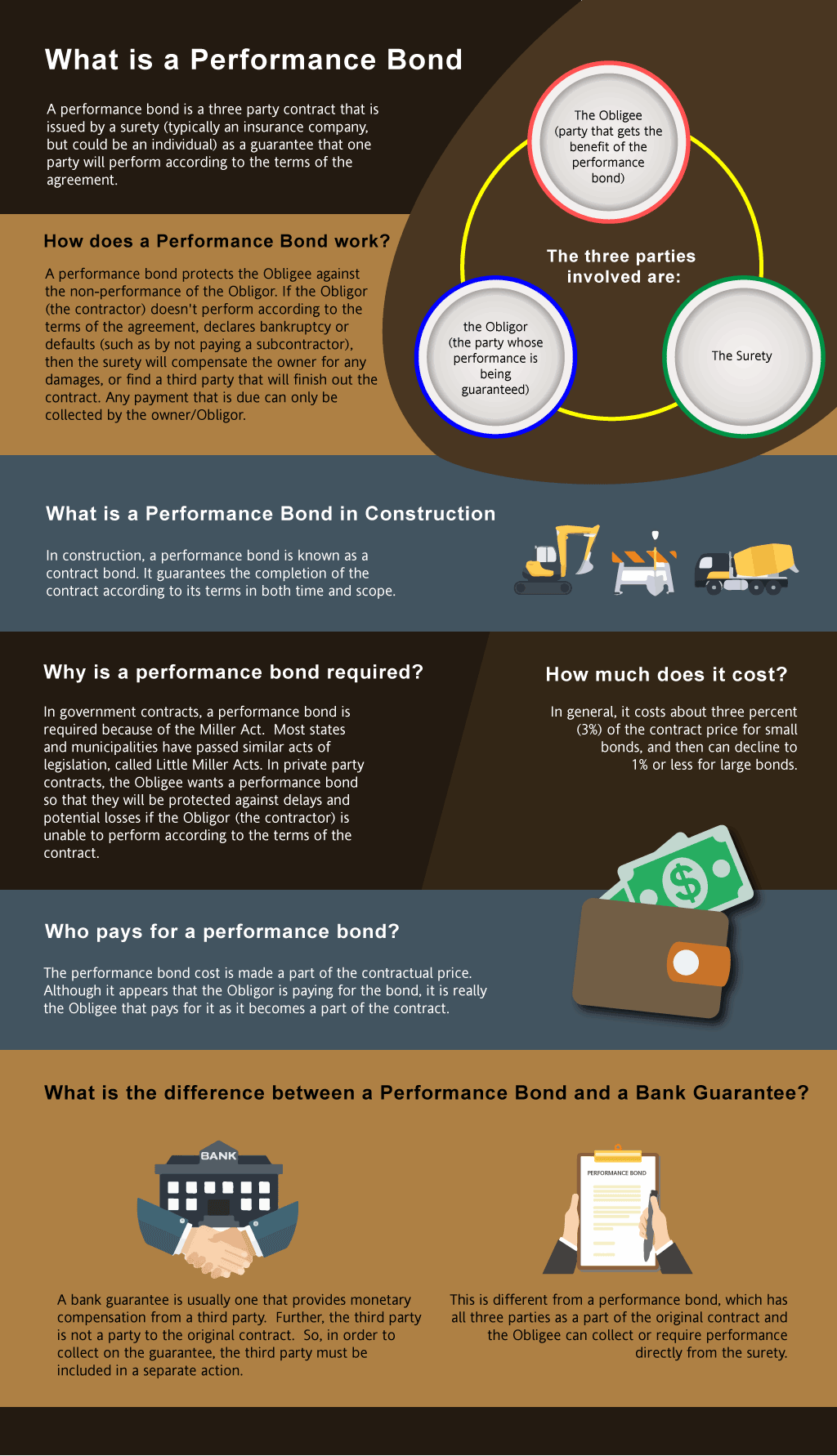
Performance bond: Protects the owner if the joint venture fails to perform. If performance falters, the surety may finance the JV to finish, tender a completion contractor, or pay up to the bond limit. Performance bonds for joint ventures almost always carry joint and several indemnity from both partners and their related indemnitors.
Payment bond: Protects laborers and suppliers by ensuring they get paid. This bond becomes critical on public work where lien rights are limited. Like the performance bond, the payment bond names the joint venture as principal and typically has full joint and several backstops.
Some ventures add maintenance or warranty bonds, particularly on heavy civil work with multi-year performance warranties. That obligation usually sits under the same indemnity fabric as the performance and payment bonds, so both partners’ risk runs until the last warranty closes.
Form the right legal vehicle before you shop the bond
Sureties ask how you are organized. They want either a clearly formed joint venture entity or, if the owner allows, a contractual joint venture with a crisp agreement. Sloppy or last-minute entity work is a red flag, because governance uncertainty often turns into cost disputes during construction.
Two common approaches work:
- A separate legal entity created solely for the project, such as a JV LLC. The JV LLC signs the owner contract and holds the bonds. Each partner owns a membership interest consistent with profit and loss sharing. This route simplifies accounting and creates a single point of operational control. It also clarifies where the surety’s principal sits. A contractual joint venture with a dedicated bank account, EIN, and clear allocation of roles. This can work on smaller projects or where owners allow “unincorporated” JVs. You still need formal banking, insurance, and authority resolutions to pass a surety’s smell test.
Whichever model you choose, get the tax and legal work done early. Bank resolutions, authority to sign, and documented capital commitments are routine underwriting asks before the surety will issue final bonds.
Governance and risk allocation that sureties can underwrite
Joint ventures fail when governance is fuzzy. The surety’s underwriter reads your JV agreement to see how decisions get made, who can write checks, and what happens when the partners disagree. They also look for levers that preserve the project if one partner stumbles.
Clear allocation of scope: Define who leads which work packages and who carries commercial responsibility. If Partner A leads structural steel, say so in the agreement and match it in the estimate and schedule of values. Scope clarity reduces duplicative overhead and finger-pointing when problems hit.
Decision rights and deadlock cures: Spell out what needs unanimous consent versus a simple majority. Set thresholds, such as change orders above a dollar amount or claims settlement authority. Include a tie-breaker, often an independent executive or a pre-agreed expert, so procurement or critical path decisions cannot stall.
Capital and funding mechanics: State how working capital enters the JV and how cash calls are handled. If one partner cannot meet a cash call, the agreement should allow the other to fund and adjust profit shares or create preferred returns. Sureties want to see rapid funding capability so the project does not starve.
Back-to-back subcontracting: If a partner self-performs or furnishes materials, the JV should subcontract to that partner on standardized terms aligned with the prime contract. This keeps cost accounting clean and improves claim defensibility.
Default and step-in rights: Include a mechanism to remove a non-performing partner from operational control while keeping their indemnity intact. Sureties want assurance that the healthy partner can steer the ship if needed.
Indemnity structure, joint and several obligations, and collateral
Contractor bond insurance doesn’t exist in a vacuum. Behind every bond is a general indemnity agreement. For joint ventures, the surety will typically require joint and several indemnity from:
- Each partner company Each partner’s parent or principal indemnitors (often individuals for closely held firms) The joint venture entity itself
Joint and several means the surety can collect the entire loss from any one indemnitor, then let the partners sort out the fairness between themselves later. Partners sometimes negotiate a “several only” arrangement with the surety that mirrors their JV ownership split, but that usually requires high financial strength, strong past performance together, and low perceived project risk. Most underwriters will not offer several-only indemnity on complex public jobs without collateral or reinsurance backing.
Collateral shows up when capacity is tight or the project risk profile is high. Expect letters of credit or cash collateral if the combined WIP is already stretched, if one partner has thin working capital, or if the project contains unusual geotechnical or schedule exposures. You can negotiate how collateral contributions track between partners. Write that allocation in the JV agreement so there is no fight at the bonding deadline.
Pre-bid strategy: show blended capacity and capability
A productive pre-bid package to your surety includes more than an estimate and a CV of past work. It anticipates underwriting concerns and provides proof that the joint venture will function like a single contractor with adequate resources.
- A consolidated look at resources: a joint staffing plan, equipment list with access rights, and a matrix showing which team members report to whom. Avoid “dual chiefs” for critical roles. Identify one project executive with signature authority. Integrated estimate and risk register: present a single estimate with joint contingencies and escalation assumptions, not two separate partner estimates patched together. Include a risk log with quantified exposures and proposed mitigations such as allowances, geotech contingencies, or schedule buffers. Funding plan: include a 12 to 18 month cash flow curve with working capital sources and a bank line summary for the JV. If you will rely on partner lines, attach bank letters acknowledging JV use and any borrowing base implications. Evidence of cultural fit: show prior collaborations, even if not formal JVs. If you have no joint history, explain how you plan to run joint QA/QC, safety, and cost control. Underwriters want to know your two systems will not collide on day one.
When the surety sees a real plan instead of a brochure, you often secure bond rates and capacity that reflect the combined strength, not the lowest common denominator.
Drafting the JV agreement to match bond expectations
Most surety objections trace back to three sections of the JV agreement. Tighten these to save time and friction at bond issuance.
Profit and loss allocation: Avoid ambiguous split formulas. If profits are 60-40, say so. If certain scopes carry different margins, describe the carve-outs and how overhead is applied. Sureties prefer structures where the partner leading more risk-heavy scopes earns an appropriate share. Misaligned economics invite cost dumping.
Audit and controls: Provide for a single JV accounting system, not parallel partner ledgers. The agreement should allow the surety and the owner to audit job cost records. Establish thresholds for executive approvals and require monthly internal WIP reviews. If you run Cost to Complete reviews quarterly, say it.
Insurance and bonding: State that the JV is the principal on all bonds and the named insured on project policies as applicable. If partners bring project-specific professional liability or subcontractor default insurance (SDI), align retentions, claims control, and reporting. Conflicts between policy wording and JV governance can bog down claims.
Selecting the bond program structure: single surety versus co-surety
On mid-size projects with two solid partners, a single surety is cleanest. One underwriter controls underwriting, issues the bonds, and manages any claim. The surety gathers indemnity from both partners. Administration is simpler.
On larger or more complex projects, co-surety structures can make sense. Two or more sureties share the risk, often on a percentage split, with one acting as lead. Co-surety allows you to blend capacity and maintain relationships with multiple markets. However, it increases coordination costs and slightly slows claims decisions. Make sure your co-surety agreement designates a lead for decisions during crises and aligns loss-sharing and salvage rights. If you go co-surety, start the process early. Herding two underwriting teams into one closing calendar takes patience.
Fronting and reinsurance can also expand capacity. Some ventures rely on a fronting surety backed by reinsurance or facultative support from others. The owner still sees a single bond. Behind the curtain, your broker and the lead surety spread risk. Owners and procurement teams tend to prefer this over visible co-surety, but underwriting timelines are similar.
Managing SDI and subcontractor risk inside a bonded JV
Payment bonds protect lower tiers but do not prevent default. Subcontractor default insurance, when used correctly, can stabilize cash flow and protect margins. In a JV, SDI works best when the partners use one program for the project, not separate partner programs. A single SDI policy avoids gaps in default definitions and recovery mechanics.
Agree on prequalification standards, default triggers, and claims leadership. If one partner brings the SDI master, document how the JV pays the premium, allocates deductibles, and handles reimbursement on a recovery. For example, a $2 million deductible can wreck the wrong partner if the allocation is fuzzy. Your JV agreement should say who funds the deductible upfront and how the cost follows responsibility for the defaulting trade.
Public versus private work: procurement-driven bond nuances
Public contracts often require specific bond forms and penal sums, sometimes 100 percent performance and 100 percent payment. Some DOTs and transit agencies insist on their own bond language, including restrictive cancellation and notice terms. Get forms early and route them to your surety so there are no surprises at award.
Private owners vary. Some will accept lower bond amounts, staged bonds, or alternative security such as letters of credit combined with parent guarantees. If you propose nonstandard security, coordinate with your surety before you commit. Your bondability depends on how the surety views the owner’s form and the legal jurisdiction. One practical edge: on negotiated private work, you can sometimes gain better pricing by presenting a performance bond for a percentage of the contract, paired with a robust guaranteed maximum price with shared savings and stronger owner audit rights. Sureties sometimes price partial bonds more favorably if the owner has meaningful remedies outside the bond.
Cash flow discipline and how it affects the bond relationship
Sureties lend their paper, not cash. They expect you to run the project with cash discipline so their paper never needs to move. In a JV, that means timely billing, rigorous change order management, and an honest view of the forecast.
I have seen ventures get into trouble by swiftbonds login protecting partner optics rather than project truth. One partner refuses to recognize a loss on their scope, fearing implications for their standalone WIP. The JV then overstates earnings, cash distributions continue, and suddenly the venture needs a large cash call after retainage sits locked. Sureties watch for this pattern. If your monthly WIP to the surety does not match job reality, your bond program will tighten at renewal. Build a culture of bad-news-first reporting inside the JV. It lowers your cost of capital and earns trust with your surety.
Claims scenarios and how proper structure limits collateral damage
No one forms a JV expecting a claim, but planning for one reduces panic. Consider three common scenarios.
Underestimated self-perform scope: The partner leading concrete discovers a productivity gap. The JV’s contingency is thin. A disciplined governance structure allows for rapid cost-to-complete recalculation and a cash call proportionate to responsibility. The surety sees a plan and stays patient. Without those mechanisms, the surety senses drift and considers collateral demands.
Subcontractor default on critical path: The JV has SDI, but the default hits schedule float. If the JV has authority to re-sequence and the partners have step-in rights to direct labor, schedule recovery is possible without a new bond. The surety usually supports the JV’s chosen cure, especially if you show a revised logic-linked schedule and a cash flow update tied to recovery.
Owner-driven design changes and slow CO approvals: The JV’s change management process should outline interim funding so the job keeps moving. If the owner delays payment, the partners fund measure-and-pay labor to preserve schedule while documenting T&M flawlessly. Sureties dislike disputes rooted in sloppy documentation. Strong paperwork, matched to contract terms, keeps bond conversations calm even when receivables stretch beyond 90 days.
Practical steps to present your JV for smooth bonding
Here is a compact checklist I give teams before they approach their surety. Use it as a pre-flight, then fill any gaps before you submit.
- A signed or near-final JV agreement with governance, funding, and default provisions, plus draft organizational chart and authority matrix. Single integrated estimate with a risk register and management plan showing how contingencies will be released and tracked. 18-month cash flow, including line of credit availability letters and any bank consents for JV borrowing or cross-collateralization. Evidence of role clarity: who leads safety, QA/QC, scheduling, and cost. Attach program manuals or harmonized procedures if partners use different systems. Draft owner contract, bond forms, and insurance requirements reviewed by counsel and broker, with any proposed deviations redlined.
Pricing and capacity: what to expect from the market
Bond rates for well-underwritten joint ventures on standard forms often land in the same range as standalone bonds for each partner, adjusted for size. For large projects, blended rates can actually improve due to scale. That said, you may see higher effective costs if:
- The surety views the partners as uneven, with one much weaker. They will price to the weaker balance sheet and may require collateral or co-surety. The project has unusual risk, such as deep foundations in variable soils, marine work, or a highly compressed schedule with liquidated damages stacked above 1 percent per week. Expect tighter indemnity and perhaps staged bonding with performance milestones. Your partners have overlapping backlogs that spike combined WIP. Sureties track aggregate exposure. If the combined backlog stretches working capital ratios beyond comfort, you will pay through collateral or reduced capacity on other jobs.
Capacity planning should start at least 60 to 90 days before bid. If you need co-surety or reinsurance, start earlier. A mature relationship with your broker pays dividends here. They can shape the story, presell underwriters on the JV’s strength, and line up alternates if one market hesitates.
Edge cases that require special attention
International partners: If one partner is foreign, explore local indemnity enforceability, tax issues, and whether the surety will accept foreign financial statements. Often, the surety demands a domestic parent guarantee or cash collateral.
Design-build JVs: When design liability sits under the JV, align professional liability with the bond program. If the designer is a member of the JV, be clear how PL limits, retentions, and extended reporting periods align with the performance obligation. Some sureties require higher working capital and verified design QA to support the bond.
Multiple-project JVs: Occasionally, partners form a JV “platform” to pursue a series of jobs. Sureties then underwrite portfolio risk. Create ring-fencing mechanisms so a loss on Project A does not swallow Project B’s profits. Separate banking and accounting per project, even under a master JV, can help.
Terminated partner: If one partner enters distress mid-project, the JV’s step-in rights become critical. The surety may accept a reconstituted JV if the remaining partner and replacement show adequate capacity. Draft admission and withdrawal mechanics in your agreement so you are not inventing process under duress.
Working with your broker and surety team as strategic partners
Treat your surety broker like part of the preconstruction team. Bring them into partner selection discussions early, not at the bid bond scramble. They can run a quiet test with surety markets to gauge appetite for the proposed pairing, identify concerns about one partner’s financials, and suggest structural tweaks to improve terms. When I see partners loop in their broker while still aligning estimate assumptions and governance, bond issuance becomes a non-event.
On the surety side, build a cadence of transparent reporting. Send monthly WIP, cash flow updates on the JV’s bank covenants, and early flags on claims or receivable slowdowns. If you need a consent to a major subcontract award or change order outside normal thresholds, ask before you sign. Underwriters are more flexible when they feel informed and respected.
A short case story: two contractors, one rail station, and one clean bond close
A midsize building contractor teamed with a heavy civil firm to bid a $250 million rail station expansion. The building contractor brought vertical experience and station finishes. The civil firm owned the utility relocations and track interface. Both had moderate bond capacity on their own, not enough to carry the job. They formed an LLC JV with a single project executive from the civil partner. The agreement set a 55-45 profit split favoring the civil scope, established monthly Cost to Complete reviews, and allowed either partner to fund emergency cash calls with a preferred return.
Their bonding approach featured one lead surety with a quiet reinsurance panel. They presented a joint staffing plan, harmonized safety and QA manuals, swiftbonds and a risk register that priced contaminated soil exposure with a distinct contingency bucket. The surety initially requested a 10 percent letter of credit. The partners offered a staged LOC that stepped down as utility relocations and underpinning milestones cleared. That compromise, linked to measurable milestones, unlocked the final bond without overcollateralizing for the full term.
Midway through the job, a subcontractor defaulted on communications cabling. The JV triggered SDI, funded the deductible per the JV agreement, and re-sequenced platform work to preserve the critical path. They communicated early with the surety, shared the recovery plan, and avoided any bond friction. The job finished sixty days late due to unrelated owner-driven design changes, but within the bond’s cushion and without a claim.
The difference was structure backed by discipline. The bond program reinforced that structure rather than dictating it at the eleventh hour.
Bringing it together
A joint venture becomes real when an owner awards a contract and a surety signs its name beside yours. To reach that point on favorable terms, match the internal deal to external risk. Form a clean entity or airtight contractual JV. Write governance with decision rights, capital mechanics, and step-in provisions that can survive stress. Present an integrated estimate, a candid risk register, and a cash plan that does not rely on hope. Recognize that contractor bond insurance is not a commodity. It is a relationship underpinned by indemnity, trust, and operational proof.
Get those pieces right and the surety transforms from a hurdle into a force multiplier. Capacity expands. Pricing holds. When trouble arrives, you have a partner who knows your playbook and gives you room to execute. That is the quiet edge that wins work and finishes it, without mortgaging the future of either partner.